
Bigos (Polish Hunter’s Stew) A Childhood Meal, Rebuilt
By Tom Rychlik
Some meals stick with you.
Bigos is one of those for me. It’s a dish I grew up eating, especially when the weather turned cold. It’s hearty, comforting, and unapologetically filling. The kind of food that sits with you, warms you up, and somehow tastes even better the next day.
Traditionally, Bigos is known as Polish Hunter’s Stew. It dates to the 16th century and was often cooked outdoors over an open fire. Hunters would throw together cabbage, sauerkraut, and whatever meat they had on hand, then let it simmer all day. There was no rush. Time was part of the recipe.
That idea has always stuck with me.
This version keeps the soul of Bigos but makes a few adjustments based on what I had available and how we like to eat now.
What Is Polish Bigos?
At its core, Bigos is built on a few simple things:
Cabbage and sauerkraut
Smoky meat
A long, slow cook
It’s not fancy food. It’s practical food. Over time, families adapted it based on what they could afford or what was available. Some versions were heavy on meat; others leaned more on cabbage. Every household did it a little differently, and that’s kind of the point.
The Two Traditional Styles
Bigos Królewski (Royal Bigos)
This was the version made for special occasions. Game meats, beef, pork, and richer spices. Meat-forward and heavy.
Bigos Hultajski (Rogue’s Bigos)
The everyday version. More cabbage and sauerkraut, less meat. Still filling, still comforting.
Most modern kitchens land somewhere in between, and that’s exactly where this batch ended up.
How I Made This Version
I wanted something that still felt traditional but used leaner meats and ingredients we keep around.
Meat Used
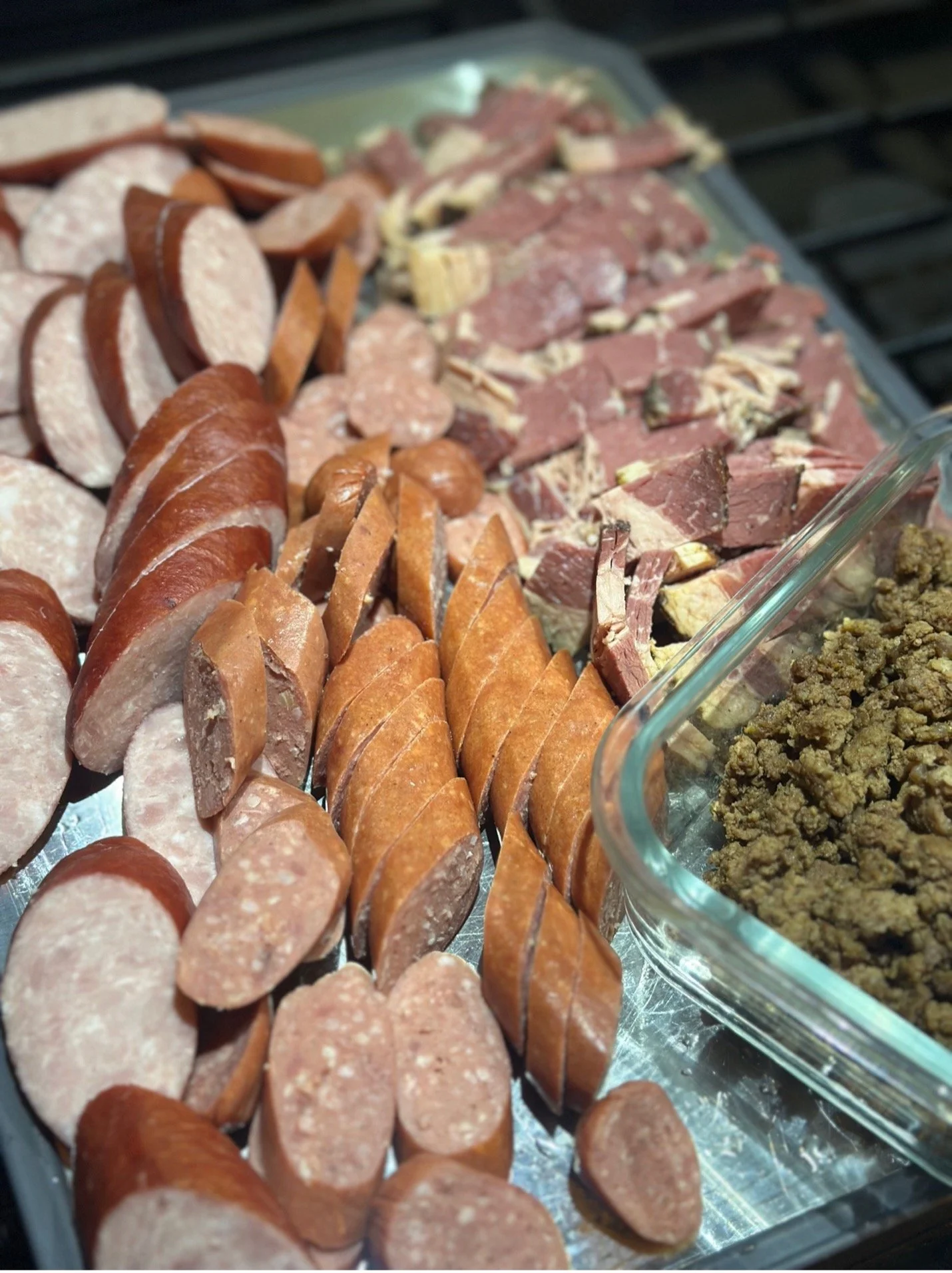
Grass-fed, grass-finished ground beef
Smoked bison sausage
Kielbasa (smoked sausage)
Beef brisket bacon instead of pork bacon
Vegetables
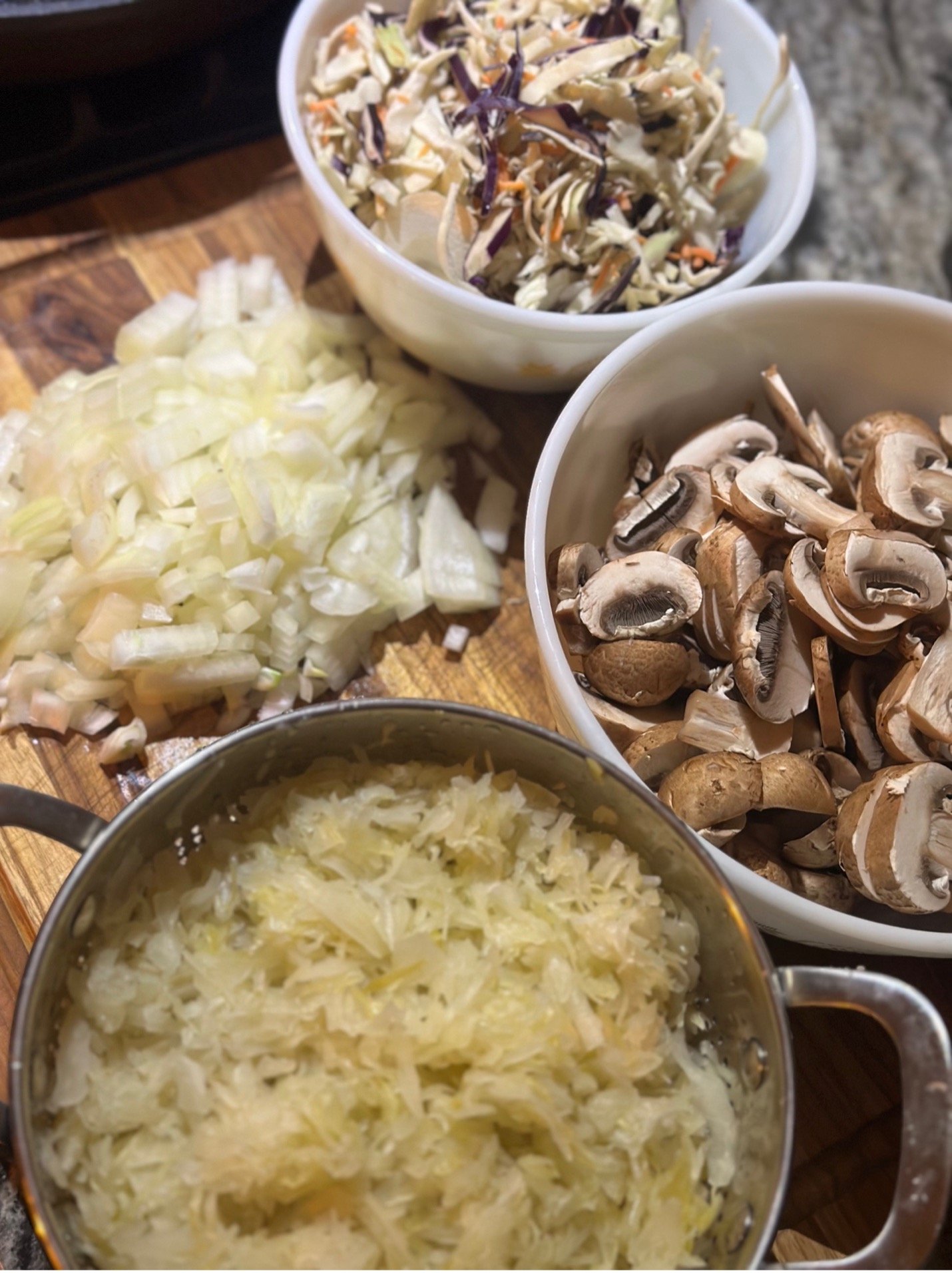
Sauerkraut (drained)
White cabbage
Onion
Baby portabella mushrooms
I didn’t use dried mushrooms or rehydrate anything this time. I kept it simple and used fresh mushrooms instead.
Spice Swaps
I didn’t have apple, prune, allspice berries, marjoram, honey, wine, or added salt. Instead, I used what was on hand:
Cinnamon
Cumin
Thyme
Oregano
This gave it a similar flavor profile and it still worked well with the sauerkraut and smoked meat.
Liquid
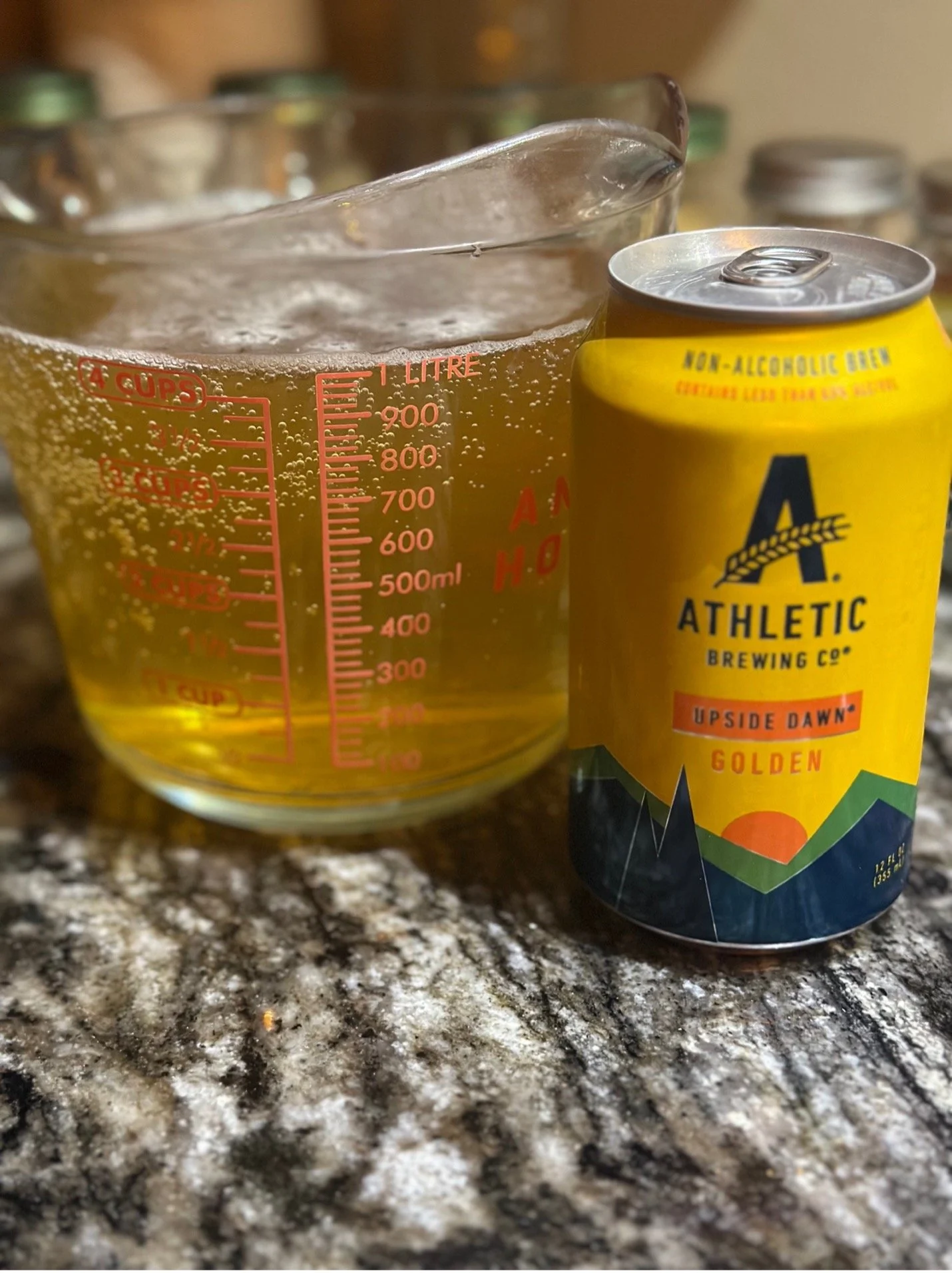
Instead of wine, I used Athletic Brewing Upside Dawn Golden Ale, a non-alcoholic beer. It adds depth without alcohol, and it’s one Karly can have since the gluten has been removed.
Cooking Method
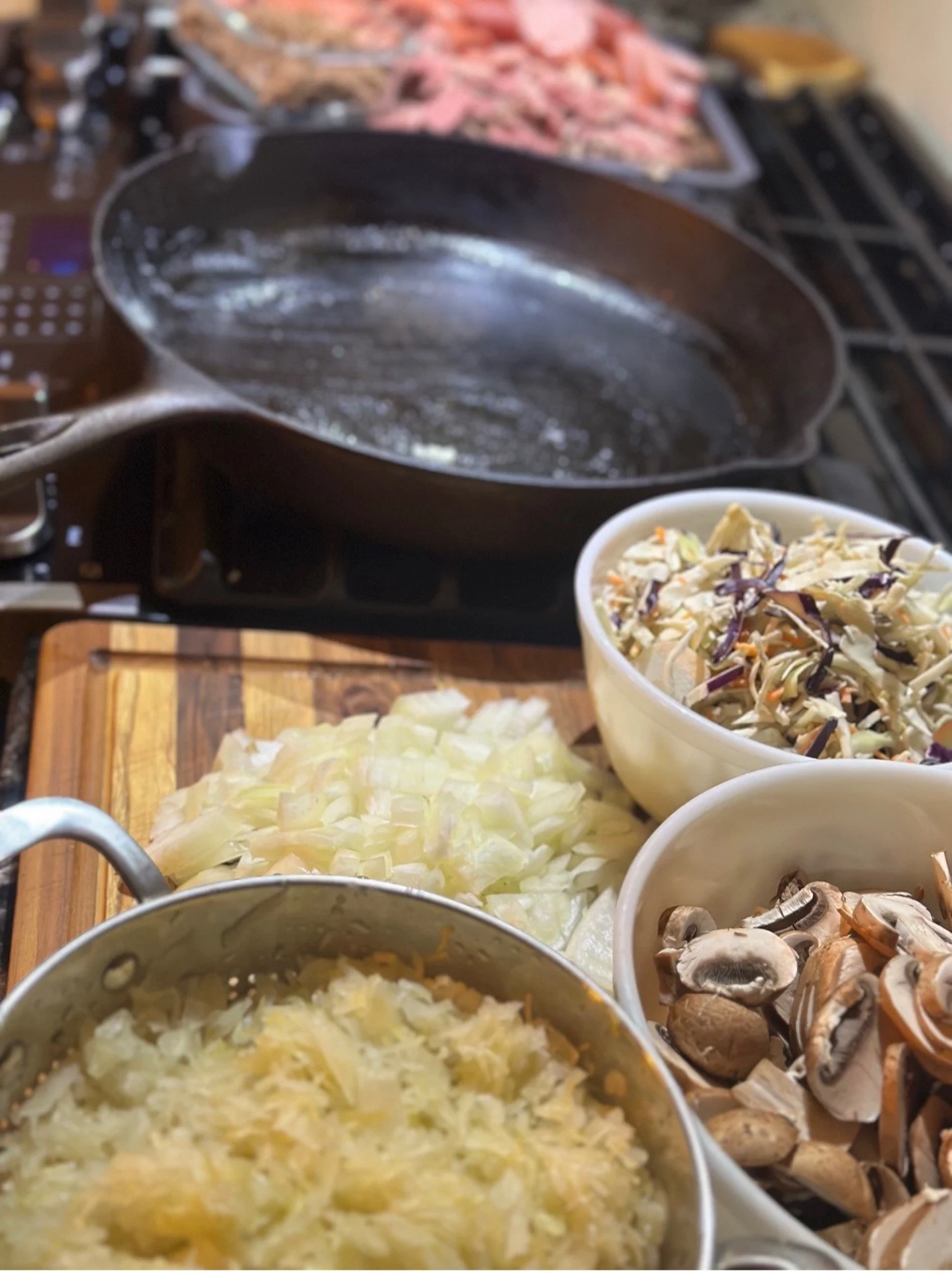
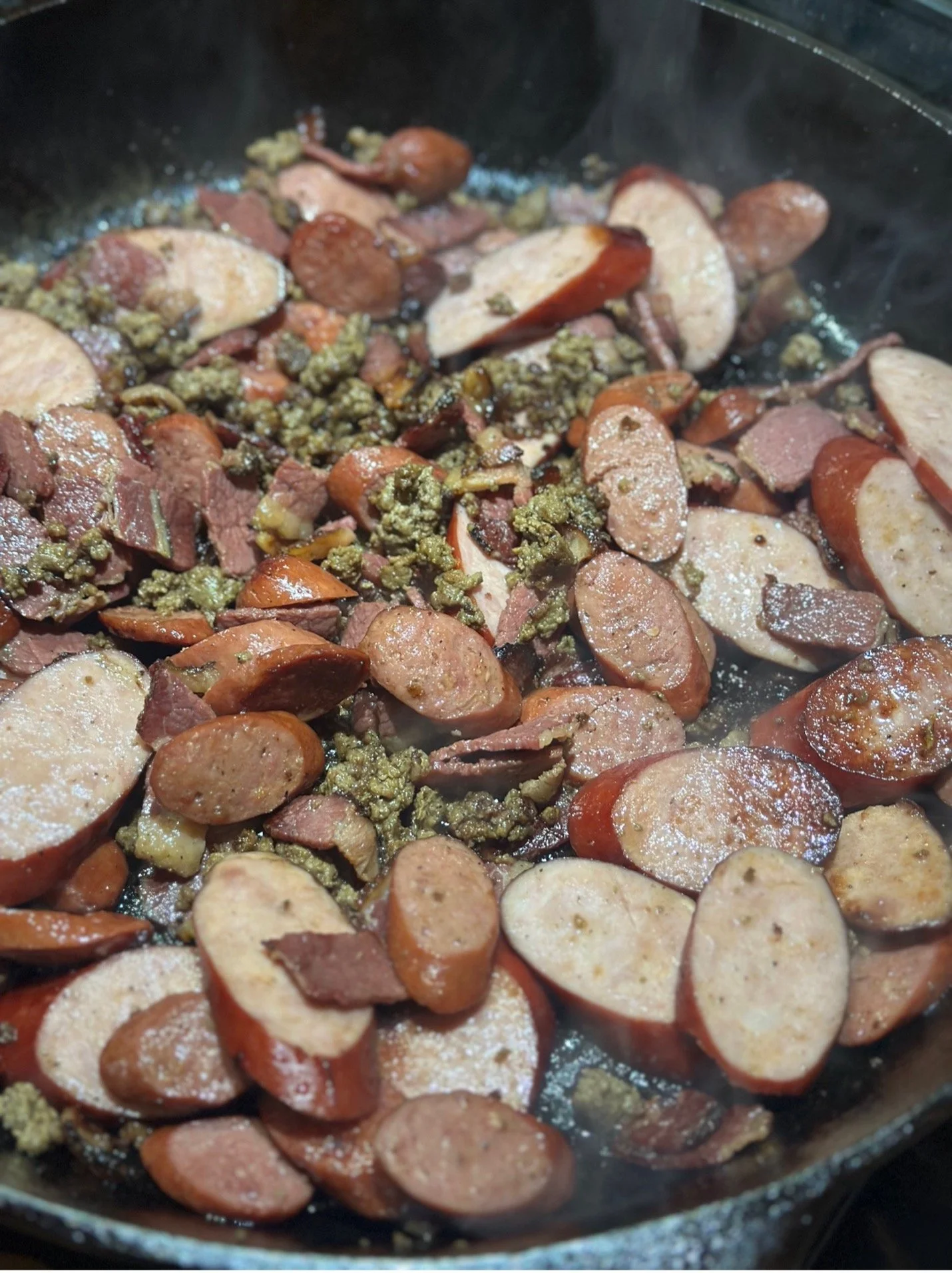
I browned all the meat first to build flavor, then sautéed the onions in the same pan. Everything went into the slow cooker with the cabbage, sauerkraut, mushrooms, spices, water, and beer.
From there:
High for about 5 hours
Or low for about 7 hours
If you’re home, stir it occasionally. If you’re not, it’ll still turn out fine.
Let It Sit aka Let it Cook!
Like most stews, Bigos gets better after it rests. The flavors come together more after cooling and reheating. Honestly, the second day is usually the best bowl.
What We Served It With
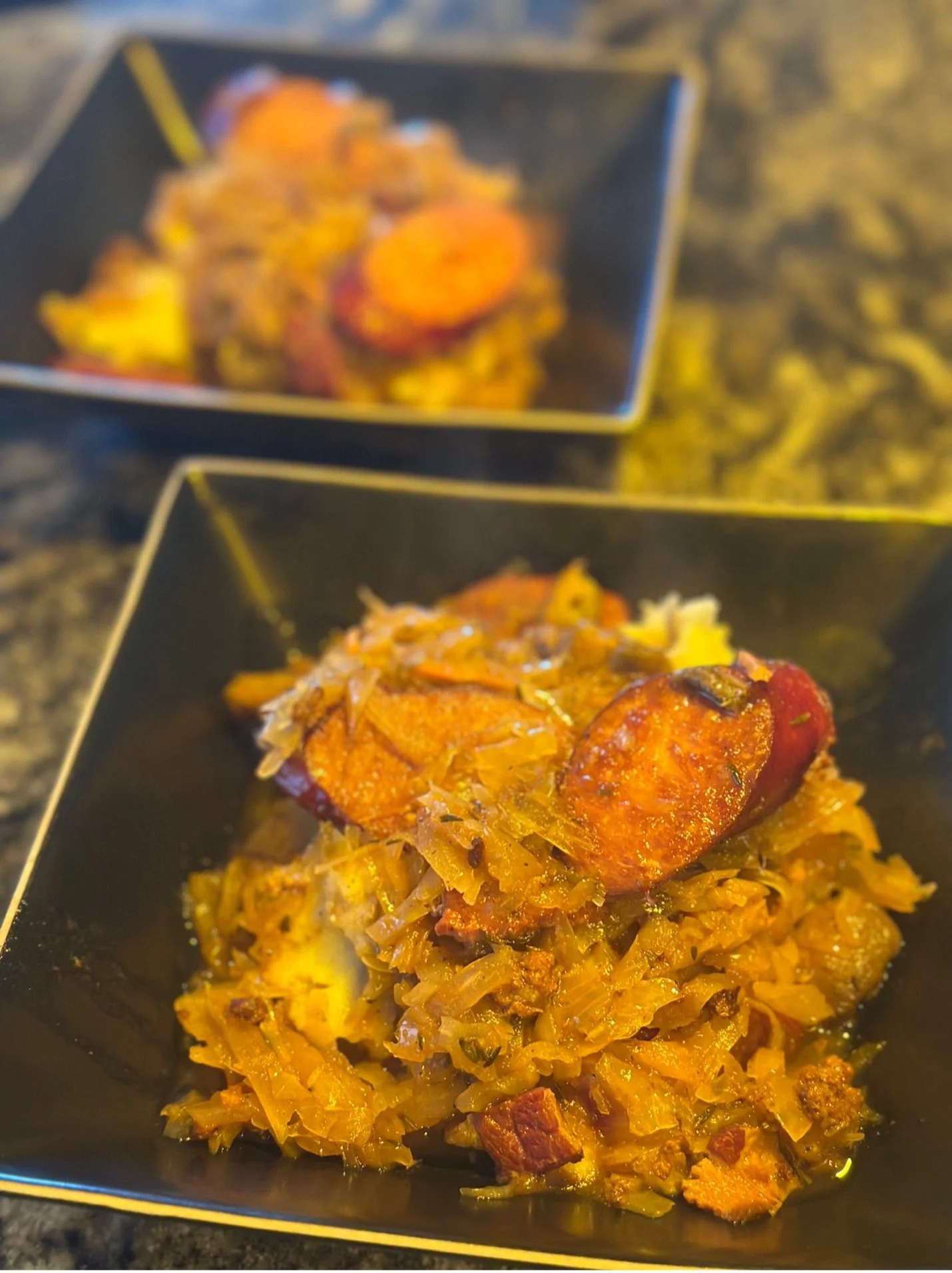
We made mashed potatoes, because that’s what sounded good and felt right. Bigos is traditionally served with bread or potatoes, but there’s no rule here. Eat it how you like.
This stew stands on its own, but it’s also great over:
Mashed potatoes
Roasted potatoes
Or just in a bowl with a spoon
Final Thoughts
Bigos isn’t about perfection. It’s about using what you have, cooking it slowly, and letting time do its thing.
This version is a little lighter than what I grew up eating, but it still hits that same comfort note. It still smells like home. And it still tastes better the next day.
If you’ve never made Bigos before, don’t overthink it. Start with cabbage, sauerkraut, meat, and patience. The rest will figure itself out.
Na Zdrowie.