
Organic vs. Non-Organic: A Simple Way to Choose
A realistic guide to the Dirty Dozen, Clean Fifteen, and making better choices
If you’ve ever stood in the produce section debating whether organic is “worth it,” you’re not alone.
Some people say organic is a must.
Others say it doesn’t matter at all.
And somewhere in the middle… most people are just trying to do their best without overcomplicating it.
Let’s simplify it.
What Does “Organic” Mean?
At a basic level, organic produce is grown:
Without synthetic pesticides and herbicides
Without genetically modified organisms (GMOs)
With more natural farming practices
That doesn’t mean organic is perfect.
And it doesn’t mean conventional produce is “bad.”
It just means the level of chemical exposure can differ.
A Better Way to Think About It
The goal isn’t (ever) perfection.
It’s reducing unnecessary exposure where it makes sense - especially for foods you eat often.
This is where tools like the Dirty Dozen and Clean Fifteen can actually be helpful. The Environmental Working Group (EWG) publishes an annual guide ranking produce based on pesticide residue. The lists below are adapted from their most recent report and used here as a general reference.
These shouldn’t be looked at as strict rules but more guidelines to help you make the best choices for you and your family.
The Dirty Dozen: Where Organic Matters More
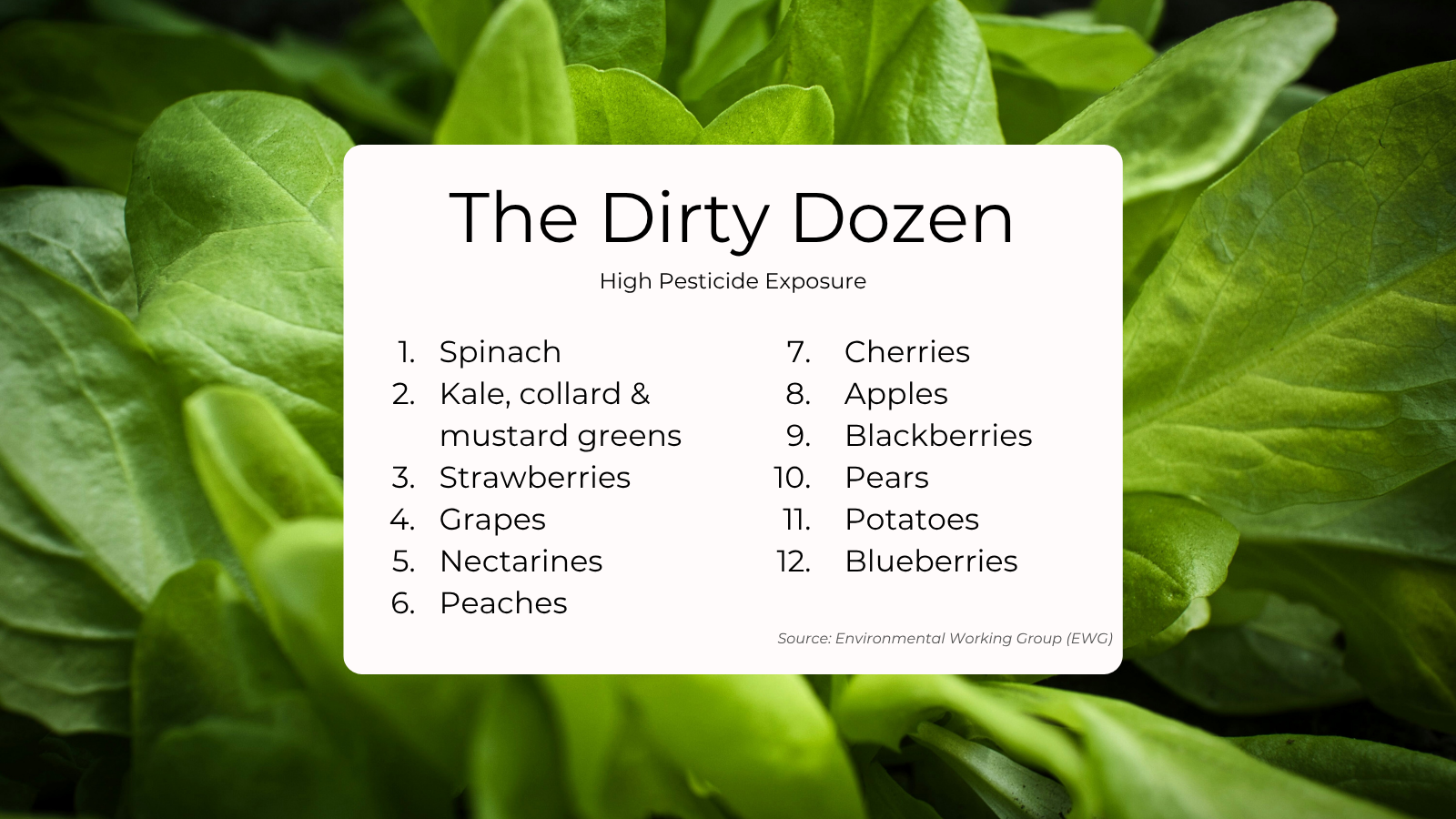
The Dirty Dozen highlights produce that tends to carry the highest pesticide residue when grown conventionally.
These are foods where choosing organic can make a bigger difference.
Common themes:
Thin skins
Soft surfaces
Harder to wash thoroughly
If you’re prioritizing where to spend your money, this is a good place to start.
The Clean Fifteen: Where You Can Relax
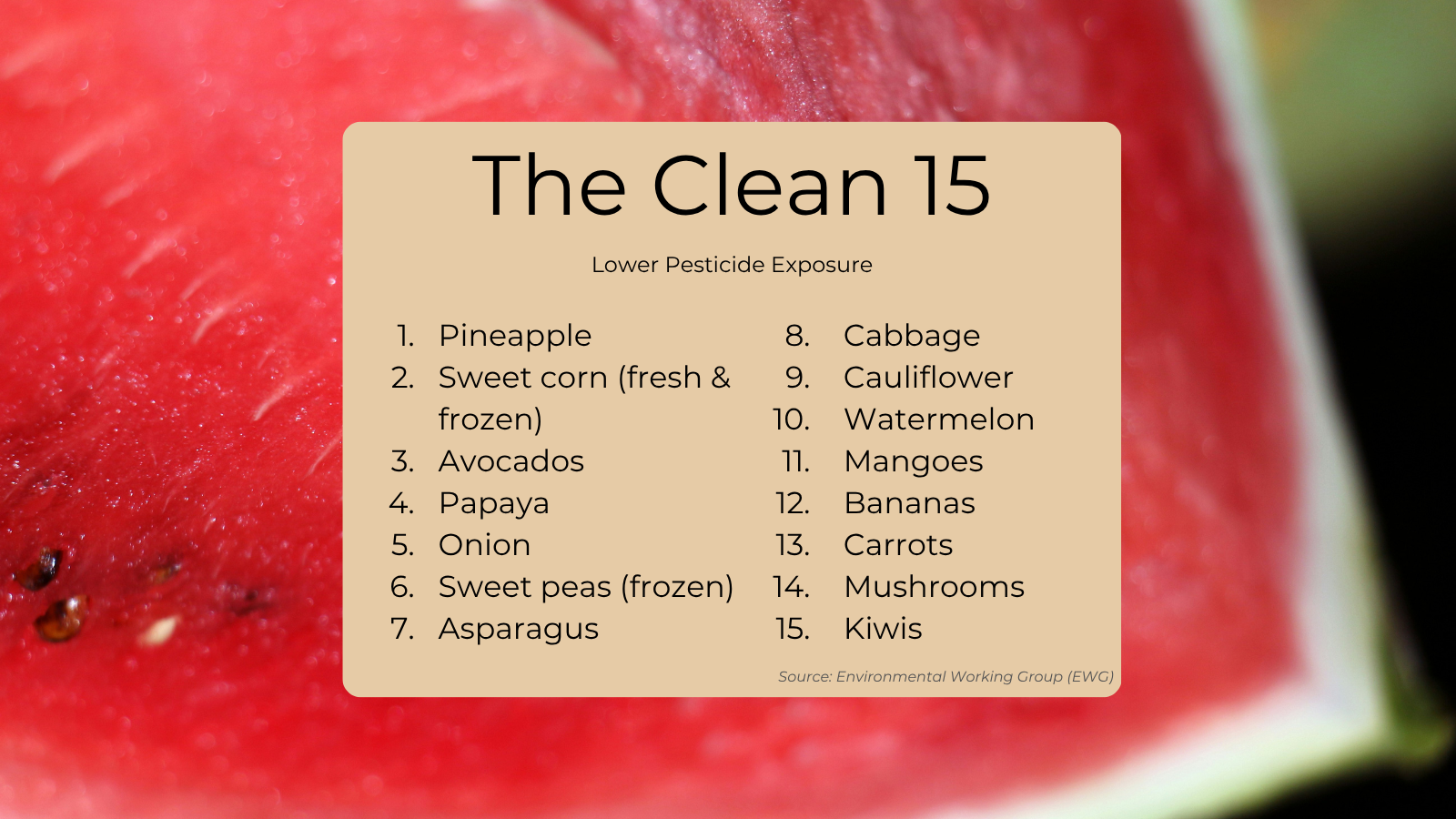
The Clean Fifteen includes produce with the lowest levels of pesticide residue.
These tend to have:
Thick skins or peels
Natural protection from exposure
For these, buying conventional is generally considered a reasonable option.
The Middle Ground (Where Most People Live)
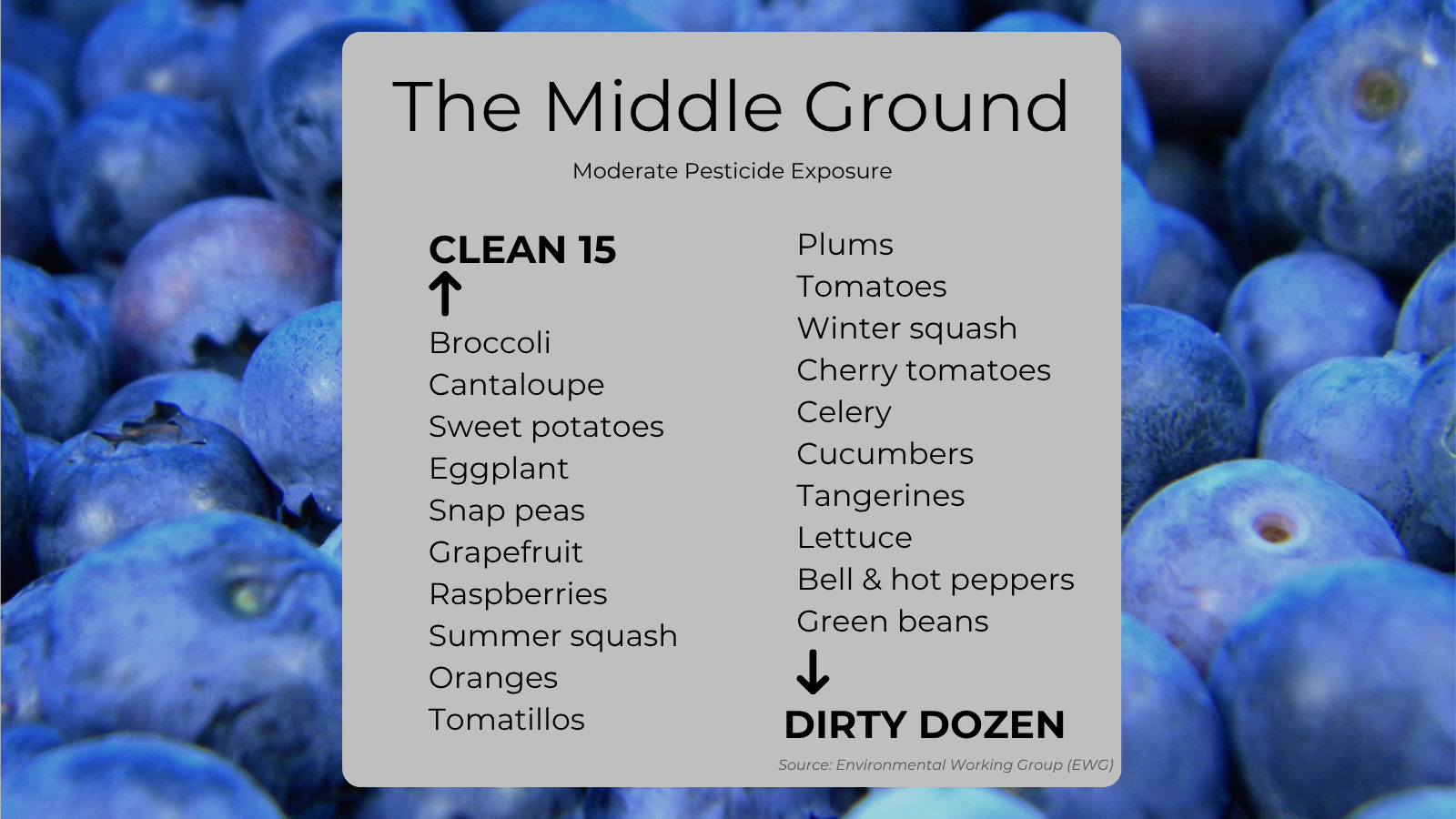
Then there’s everything in between.
Not everything fits nicely into “clean” and “dirty”.
This is where flexibility matters.
You don’t need a perfect system, you need a realistic one you can stick to.
A Simple Way to Approach It
Instead of overthinking every grocery trip, try this:
Buy organic when it’s easy or affordable (especially from the Dirty Dozen)
Don’t stress about Clean Fifteen items
Wash your produce (yes, it still matters)
Focus more on eating fruits and vegetables consistently than sourcing them perfectly
Because the truth is:
Eating conventional produce is still far better than not eating produce at all.
How to Wash Your Produce (Simple + Effective)
Even when you’re buying conventional produce, there are simple ways to reduce residue before you eat it.
For organic produce:
Soak in cold water with a splash of vinegar for 5–10 minutes
For thicker-skinned produce, use a brush under running water after soaking
For thinner-skinned items, rinse under cold water while gently rubbing with your hands
For non-organic produce:
Soak in cold water with 2–4 tablespoons of baking soda for 10–15 minutes, then rinse thoroughly
Baking soda creates a slightly alkaline environment, which can help break down and lift pesticide residue from the surface more effectively than water alone
It doesn’t need to be complicated.
A few small habits like this can help reduce exposure and support better overall food quality, without adding stress to your routine.
When It Makes Sense to Prioritize Organic
If you’re trying to be more intentional with your choices, a simple approach is:
Prioritize organic for foods you eat often (especially from the Dirty Dozen)
Don’t stress about Clean Fifteen items
Make the best choice your budget allows
You don’t have to overhaul everything overnight.
Small, consistent upgrades over time can make a big difference.
Where Local Farming Fits In
This is where things get interesting, and where your choices can go beyond labels.
Many local farms:
Use low-spray or no-spray practices
Prioritize soil health
Harvest closer to peak ripeness
Offer more transparency than grocery stores
And often… they’re not certified organic. Not because they don’t follow good practices, but because certification is expensive and time-consuming.
This is why knowing your farmer — and how your food is grown — can matter more than the label itself.
What This Really Comes Down To
This isn’t about fear, and it’s not about being perfect (hint: perfect doesn’t exist).
It’s about:
Being aware
Making small upgrades where you can
Reducing exposure over time
Supporting your health in a realistic way
A Better Standard to Aim For
If you take one thing from this:
Don’t let the organic vs. non-organic debate stop you from eating well.
Start simple:
Eat more whole foods
Add more produce to your plate
Upgrade quality when it makes sense
Stay consistent
That’s where the real impact is.